
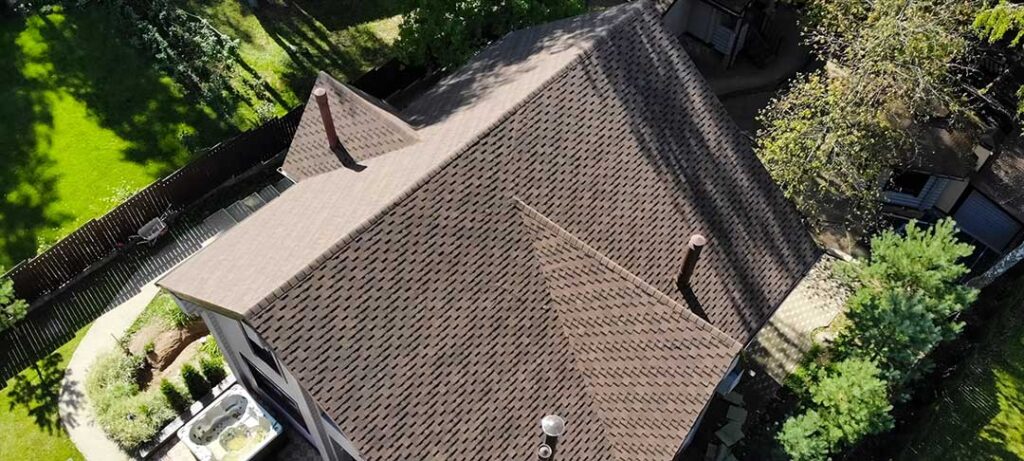
Humidity affects roofing materials by keeping surfaces and building components damp for longer periods. In Queensbury, NY, the combination of humid summer air, rain, snowmelt, shaded roof areas, and temperature swings can influence how shingles, underlayment, flashing, wood, and insulation perform over time.
Humidity alone does not usually destroy a roof. The greater concern is repeated or prolonged moisture, especially when ventilation is poor or water cannot drain and dry properly.
How does humidity affect asphalt shingles?
High humidity can make asphalt shingles remain damp longer, particularly on north-facing slopes, beneath tree cover, and in areas with limited airflow. Moisture may soften surface debris, encourage organic growth, and contribute to the gradual loss of protective granules when combined with weather exposure.
Asphalt shingles are designed to handle normal moisture, but their performance may decline when several conditions occur together:
- Persistent shade
- Poor attic ventilation
- Heavy leaf or needle buildup
- Repeated freeze-thaw cycles
- Standing water caused by roof drainage problems
- Algae, moss, or lichen growth
Humidity does not typically cause shingles to curl overnight. Curling, blistering, cracking, and granule loss usually result from a combination of age, heat, ventilation problems, installation issues, and long-term weather exposure.
Can humidity cause roof leaks?
Humidity by itself does not create a hole in a roof, but it can contribute to conditions that lead to leakage. Moisture may weaken wood components, support biological growth, and expose small defects that become more serious during heavy rain or melting snow.
A roof leak can begin at many locations, including:
- Damaged or missing shingles
- Open seams around flashing
- Deteriorated pipe or vent boots
- Valleys filled with debris
- Blocked drainage paths
- Loose fasteners
- Ice-related damage near eaves
High indoor humidity can also create moisture problems that appear to be roof leaks. Warm, moist air from kitchens, bathrooms, laundry areas, or unfinished basements may enter the attic and condense on cold roof sheathing. Water droplets can then fall or stain ceilings, even when the exterior roofing material is intact.
Why is attic ventilation important in humid conditions?
Proper attic ventilation helps remove warm, moist air and allows the roof assembly to dry. A balanced system generally includes intake openings near the lower roof edge and exhaust ventilation near or along the upper roof area.
Without adequate airflow, humid air can remain trapped against the underside of the roof deck. During colder weather, this moisture may condense on roof sheathing, nails, insulation, and framing. Over time, the result can include:
- Damp or compressed insulation
- Mold-like surface growth
- Wood discoloration
- Rusted fasteners
- Reduced insulation performance
- Premature deterioration of roof decking
Ventilation does not mean allowing outdoor air to enter uncontrolled through gaps in the ceiling. Air movement should occur through designed attic openings, while the ceiling plane should limit warm indoor air from escaping into the attic.
What happens to roof decking and wood framing?
Roof decking, usually made from plywood or oriented strand board, can absorb moisture when humidity remains high or when water enters through a roof defect. Repeated wetting and drying may cause swelling, edge deterioration, delamination, or a loss of structural strength.
Wood framing can also be affected if moisture remains elevated for long periods. A small amount of occasional dampness may dry without lasting harm, but persistent moisture creates a more serious risk. Warning signs include:
- Soft or spongy areas in the roof deck
- Dark staining
- Musty attic odors
- Rust around nails or metal fasteners
- Sagging sheathing
- Damp insulation
- Visible condensation beneath the roof

A roof deck that has lost strength may not support foot traffic safely. Attic inspections should be approached cautiously, especially where insulation obscures the framing or where water damage is suspected.
Does humidity affect metal roofing?
Metal roofing generally resists moisture well, but humidity can still affect surrounding components and connections. Condensation may form on the underside of metal panels when warm, moist air meets a cold surface. If the assembly cannot dry, corrosion may develop at fasteners, seams, cut edges, or areas where protective coatings have been damaged.
Metal roofs also expand and contract with temperature changes. Movement is normal, but poorly sealed penetrations or improperly detailed joints may allow water to enter. Humidity can accelerate corrosion if moisture remains trapped against exposed metal.
A metal roof should have adequate air movement and a properly designed underlayment system. Condensation control is especially relevant in buildings with heated attics, workshops, garages, and areas where indoor moisture levels change frequently.
Can humidity cause moss, algae, or lichen?
Humidity can create favorable conditions for organic growth, but moisture is only one factor. Shade, roof orientation, surface debris, and limited drying time also matter.
Algae may appear as dark streaks or discoloration. Moss is thicker and can lift or separate roofing materials as it grows beneath edges. Lichen attaches firmly to surfaces and may be difficult to remove without damaging the roofing.
Removing growth aggressively can shorten roof life. Power washing, scraping, or using unsuitable chemicals may strip granules, damage coatings, or force water beneath shingles. Organic growth is easier to manage when leaves and debris are cleared safely and roof drainage remains unobstructed.
How do Queensbury’s seasonal conditions affect moisture?
Local roofs must handle more than summer humidity. Warm, damp periods can be followed by sharp temperature drops, winter snow, spring thawing, and periods of rain. These cycles repeatedly change the moisture content of roofing materials and wood components.
During winter, indoor moisture can condense in a cold attic. During spring, melting snow and ice can expose weaknesses around eaves, valleys, chimneys, skylights, and roof penetrations. In summer, humid air and shaded surfaces may slow drying after rainfall.
This means a roof can have moisture-related problems even when no active leak is visible. A stain that appears after a cold night may be condensation, while a stain that grows after rain may indicate water entering from above.
What can residents check safely?
A basic visual review from the ground can identify conditions worth monitoring. Look for missing or uneven shingles, dark streaks, moss, sagging gutters, blocked downspouts, and areas where tree branches keep the roof shaded.
Inside the attic or upper levels, check for musty odors, damp insulation, visible condensation, or ceiling stains. Do not walk on a steep, wet, icy, or damaged roof. Roof surfaces can be slippery, and hidden deterioration may make walking unsafe.
Indoor humidity can also be reduced by using bathroom and kitchen exhaust fans that vent outdoors, drying damp areas promptly, and ensuring that household moisture is not being released into an enclosed attic.
Which humidity-related problems require prompt attention?
Prompt attention is warranted when moisture is accompanied by sagging, active dripping, widespread staining, exposed wood, electrical components near water, or evidence that the roof deck has softened. These conditions can involve structural or electrical hazards rather than a cosmetic roof issue.
For less urgent concerns, keeping records of stains, odors, condensation, and seasonal changes can help distinguish between an exterior leak and attic condensation. The pattern matters: damage that appears after rain suggests a different source than moisture that appears during cold weather without precipitation.
A durable roof assembly depends on more than the visible shingles. Drainage, flashing, underlayment, ventilation, insulation, air sealing, and indoor moisture control all influence how well roofing materials dry after exposure. Managing those connected factors is the most practical way to limit humidity-related deterioration in local homes.
