
What do moss and algae growth mean for a roof?
Moss and algae are common roof concerns in Queensbury, NY, especially where shingles remain damp, shaded, or covered by nearby trees. Algae usually appears as dark green, gray, or black streaks, while moss forms thicker, raised growth that can spread across shingle surfaces.
Algae is mainly a cosmetic concern in its early stages, although heavy buildup can hold moisture against roofing materials. Moss is more disruptive because it can grow beneath shingle edges, lift them, and interfere with water drainage. Neither problem should be ignored when growth is expanding or returning quickly.
Why do roofs in Queensbury develop moss and algae?
Moisture and limited sunlight are the main causes. Local roofs may stay damp for extended periods because of shaded yards, mature trees, cloud cover, autumn leaf debris, snowmelt, and spring rainfall. Roof sections facing away from direct sunlight often dry more slowly than exposed areas.
Other contributing conditions include:
- Leaves and pine needles collecting in roof valleys
- Gutters or downspouts that are blocked or overflowing
- Branches resting on or close to the roof
- Poor airflow around the roof surface
- Shingles that have become rough or weathered with age
- Persistent humidity beneath heavy tree cover
Moss and algae do not necessarily indicate that a roof was installed incorrectly. However, recurring growth can reveal drainage, shading, or ventilation conditions that deserve attention.
How can moss and algae be distinguished?
Algae generally creates flat discoloration or streaks. It may be black, blue-green, or brown and is often spread across the lower portions of shingles. Algae can be difficult to see on darker roofing materials until streaking becomes extensive.
Moss is three-dimensional. It looks fuzzy or matted and may form small clumps along shingle edges, in roof valleys, or near areas where leaves collect. If moss is thick enough to lift shingles, wind-driven rain and melting snow may be able to reach beneath the roofing surface.
Lichen, which is a combination of fungus and algae, may also appear as pale green, gray, or crusty patches. It can attach firmly to shingles and should not be scraped away aggressively.
Can homeowners remove moss and algae safely?
Minor algae staining can sometimes be treated without walking on the roof. Moss removal requires more caution because pulling or scraping it can remove protective granules from asphalt shingles and damage the underlying material.
A safer approach includes:
1. Inspect from the ground first. Look for missing shingles, curled edges, sagging areas, loose flashing, or heavy growth.
2. Clear nearby gutters from a safe position. Do not climb onto a wet or moss-covered roof to reach them.
3. Use a roof-appropriate cleaning solution if the roofing manufacturer permits it. Some cleaning products can damage metal, plants, painted surfaces, or surrounding property.
4. Apply solutions gently rather than scrubbing. Allowing the treatment to work over time is less damaging than forceful brushing.
5. Rinse carefully with low pressure. High-pressure washing can strip granules, drive water beneath shingles, and shorten roof life.
6. Protect landscaping. Some cleaning agents can harm grass, shrubs, and garden plants if runoff is not controlled.
A roof should not be cleaned during freezing conditions, strong winds, or periods when the surface is wet and slippery. Anyone using a ladder should also account for uneven ground, ice, overhead branches, and electrical hazards.
Why is pressure washing usually a poor choice?
Pressure washing can make a roof look cleaner quickly, but the force of the water may remove the small mineral granules that protect asphalt shingles from ultraviolet light and weather. It can also loosen shingles, damage flashing, and force water under laps and seals.
The roof may appear improved immediately after pressure washing, yet the damage may not be visible from the ground. Granule loss can increase wear during summer sunlight, winter freezing, and repeated temperature changes. Gentle treatment is generally safer than high-pressure cleaning.
What should be checked before treating the roof?
Moss and algae treatment works best when the conditions supporting growth are also addressed. Before cleaning, inspect:
- Roof valleys where leaves and water collect
- Gutters and downspouts for blockages or overflow
- Tree limbs that shade the roof or rub against shingles
- Areas where snow or ice regularly accumulates
- Flashing around chimneys, vents, skylights, and wall intersections
- Attic ventilation if the roof remains damp despite adequate sunlight
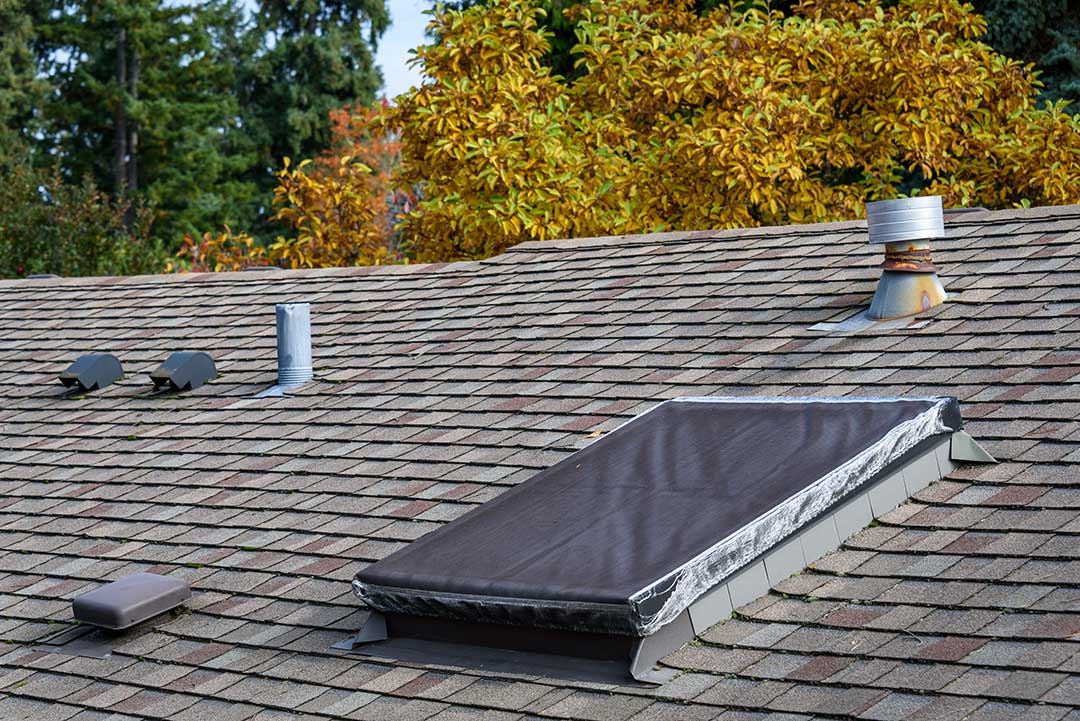
A dark roof streak is not always algae. It may be dirt, soot, deteriorated roofing material, or staining from nearby metal. Treating an unknown stain without identifying it can create unnecessary damage.
How can moss and algae be prevented from returning?
Prevention focuses on keeping the roof cleaner, drier, and better exposed to sunlight. Tree trimming can reduce shade and limit the amount of organic debris reaching the roof, although branches should not be cut or removed without considering property boundaries and local requirements.
Regular maintenance includes:
- Removing leaves and needles from valleys and roof edges when safe
- Keeping gutters and downspouts clear
- Checking that downspout outlets move water away from the foundation
- Watching for branches that touch or overhang the roof
- Maintaining adequate attic ventilation and insulation
- Replacing badly damaged or missing shingles promptly
- Avoiding debris piles that remain wet against the roofing surface
Some roofing systems include algae-resistant features, but these do not make a roof immune to staining. Persistent moisture and shade can still allow growth to develop.
Do zinc or copper strips prevent roof growth?
Metal strips installed near the roof ridge may release small amounts of metal during rainfall, which can discourage some algae and moss growth on areas below them. They are not a complete solution, and their effectiveness depends on roof slope, rain exposure, existing growth, and how much of the roof receives runoff.
Metal strips should not be treated as a substitute for clearing debris or correcting drainage problems. Improper installation can also create leaks around fasteners or ridge areas.
When does moss or algae require closer inspection?
A closer inspection is warranted when moss is lifting shingles, growth extends across a large portion of the roof, staining returns soon after treatment, or water appears in the attic or living space. Other warning signs include damp insulation, musty odors, ceiling discoloration, and granules collecting heavily in gutters.
Roof work becomes especially hazardous after rain, during freezing weather, or when moss and algae cover walking surfaces. If the roof has a steep pitch, multiple levels, fragile shingles, nearby power lines, or visible structural damage, staying off the roof is the safest choice.
In the local climate, a roof may appear dry during a warm afternoon but remain damp beneath moss, leaf litter, or shaded areas. Careful inspection and low-impact maintenance help distinguish a surface-cleaning issue from a developing roofing or drainage problem.
